Key takeaways
- The Natural Step defines sustainability through four system conditions grounded in basic science: limits on what we dig up, what we manufacture, how we degrade nature and how we treat people.
- The conditions describe where we need to end up. Backcasting from that endpoint helps you choose smart steps today.
- The ABCD process (Awareness, Baseline, Creative solutions, Devise a plan) turns the framework into a plan for households, businesses and cities.
- Wisconsin has a real track record with this approach, including the City of Neenah’s eco-municipality resolution.
When the original Sustainable Fox Valley initiative needed a shared language for very different groups (homeowners, manufacturers, school districts, city councils), it turned to The Natural Step. The framework’s appeal was simple. Instead of arguing over which green project is best, it gives everyone the same scientific “rules of the game” and a method for working toward them step by step.
This article explains the four system conditions in plain language, shows how organizations use them in planning, and connects the ideas to life in the Fox Cities. You do not need a science background. You need curiosity and a willingness to ask four good questions.
Where The Natural Step came from
The Natural Step was founded in Sweden in 1989 by Dr. Karl-Henrik Robèrt, a cancer researcher who was frustrated that public debates about the environment kept getting stuck on details. He wrote a draft describing the basic conditions that any sustainable society must meet and sent it to fellow scientists for critique. After 21 drafts, roughly 50 scientists from different disciplines agreed on a consensus document.
The key insight was to focus on principles upstream of problems. Rather than chasing thousands of individual issues (this chemical, that landfill, this species), the framework asks what society is doing systematically that causes those issues in the first place. Fix the system-level causes, and many downstream problems shrink at once.
The funnel: why waiting costs more
The Natural Step often uses the image of a funnel. On one side, demand for resources and the ability to absorb waste keeps climbing. On the other side, the capacity of natural systems to provide those resources and services is declining. Society moves through a narrowing funnel. Organizations that plan ahead can steer toward the opening; those that do not tend to hit the walls in the form of rising costs, regulations, supply shocks and reputational damage. The Lower Fox River PCB cleanup, which took about two decades and was expected to exceed $1 billion, is a local example of hitting the wall.
The four system conditions, in plain language
The Natural Step’s current wording begins: “In a sustainable society, nature is not subject to systematically increasing…” and then lists three things, followed by a fourth condition about people. You can read the official version on The Natural Step’s approach page. Here is what each one means.
1. Concentrations of substances extracted from the earth’s crust
When we dig up fossil fuels, metals and minerals faster than nature can return them to the crust, they build up in the air, water, soil and living things. Fossil carbon dioxide accumulating in the atmosphere is the best-known example. Heavy metals such as lead and mercury are others.
In everyday terms: burn less fossil fuel and use mined materials carefully and in closed loops. In a Wisconsin home, that means tightening up the house so the furnace runs less, choosing efficient equipment, and reusing and recycling metals. The original Sustainable Fox Valley guiding question put it this way: how can we reduce our use of fossil fuels and other scarce substances taken from the earth’s crust?
2. Concentrations of substances produced by society
Society also makes compounds that do not exist in nature or that break down very slowly, such as some plastics, flame retardants, pesticides and industrial chemicals. When these are released faster than they degrade, concentrations rise. The Natural Step cites antibiotics and endocrine disruptors as examples. PCBs in the Fox River are a textbook local case: a manufactured chemical that persisted in sediment for decades.
In everyday terms: use fewer persistent, toxic or man-made substances, and keep the ones you do use contained. Choose safer cleaning products, skip unnecessary lawn chemicals, dispose of household hazardous waste through county programs, and favor materials that can be safely reused or composted.
3. Degradation by physical means
This condition covers the ways we physically damage natural systems: paving over wetlands, clearing forests, draining groundwater, eroding farm soils, fragmenting habitat. The Natural Step lists deforestation and draining of groundwater tables as examples.
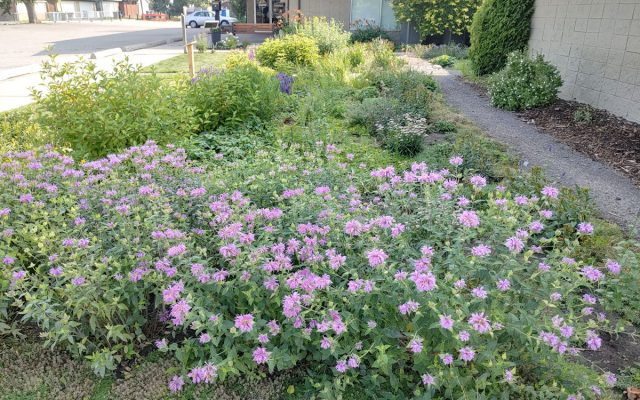
In everyday terms: protect and restore the natural systems that support life. Around Lake Winnebago and the Lower Fox River, that includes keeping soil and leaves out of storm drains, planting native species, building rain gardens, conserving shoreline buffers and supporting farmland and wetland conservation.
4. No structural obstacles to people meeting their needs
The fourth condition is about people. In The Natural Step’s current wording, a sustainable society has no structural obstacles to people’s health, influence, competence, impartiality and meaning. Earlier versions said more simply that human needs must be met worldwide.
In everyday terms: sustainability that leaves people behind is not sustainability. The original Sustainable Fox Valley framing captured this well: the first three changes should happen “without creating barriers that stand in the way of all people meeting their fundamental needs fairly and efficiently.” A weatherization program that reaches renters and lower-income homeowners, or a trail project that connects neighborhoods without reliable car access, meets this condition. A green initiative that quietly raises costs for those least able to pay does not.
Putting the conditions to work: examples at three scales
The framework is useful precisely because it scales. The same four questions apply to a family kitchen table, a factory floor or a village board meeting. The table below shows typical starting points.
| System condition | Household | Business or organization | Municipality |
|---|---|---|---|
| 1. Less from the earth’s crust | Air sealing, insulation, efficient heating, fewer car trips | Energy audits, efficient lighting and motors, fleet right-sizing, recycled metals | Efficient streetlights and buildings, transit and trail investment, renewable energy purchasing |
| 2. Fewer persistent man-made substances | Safer cleaners, minimal lawn chemicals, proper hazardous waste disposal | Green chemistry, purchasing specs that avoid persistent toxics, packaging redesign | Integrated pest management in parks, low-salt winter road practices, household hazardous waste collection |
| 3. Protect natural systems | Rain gardens, native plants, leaf management, compost | Stormwater retention on site, native landscaping, supply chains that avoid habitat loss | Stormwater ordinances, shoreline and wetland protection, compact development, urban tree canopy |
| 4. Meet people’s needs fairly | Share tools and knowledge with neighbors, support local food access | Safe, healthy jobs, fair wages, community engagement | Affordable housing near jobs, accessible transit, inclusive public participation |
The ABCD process: from principles to a plan
Principles alone do not change anything. The Natural Step pairs the system conditions with a four-step planning method known as ABCD. Here is how it works in practice:
- Awareness. Bring the people involved onto the same page. Introduce the funnel and the four system conditions, and create a shared picture of what success would look like for your home, organization or community in, say, 20 years.
- Baseline assessment. Take an honest look at where you are today against each condition. What fuels do you burn? What persistent chemicals do you use? Where are you degrading land or water? Where are people’s needs not being met? Use real data where you have it: utility bills, purchasing records, waste hauler reports.
- Creative solutions. Brainstorm everything that could close the gap between your baseline and your vision. Go wide here. Do not judge ideas yet.
- Devise a plan. Decide which actions to take first and put them on a timeline. The Natural Step suggests three tests: Does this step move us in the right direction on the system conditions? Is it a flexible platform for further improvement rather than a dead end? Does it offer a good enough return, financial or otherwise, to keep the effort going?
Then repeat. The process is a cycle, not a one-time exercise. Each round builds on what was learned and what was saved in the previous round.
Backcasting versus forecasting
Most planning is forecasting: look at current trends, project them forward, adjust a little. The trouble is that forecasting tends to lock in the assumptions that created today’s problems. Backcasting flips the direction. You start by describing a future that meets all four system conditions, then work backward to ask: what would have to be true five years before that? Ten years before? What can we do this year that moves us in that direction?
For a Fox Valley household, backcasting might sound like: “In 15 years, our home is comfortable all winter with very little fossil fuel. To get there, we will need a tight, well-insulated envelope first, then an efficient electric heating system, and possibly solar. So this fall, we start with air sealing and attic insulation, because everything else depends on it.” Our guide to home energy upgrades ranked by payback follows exactly this logic.
The Natural Step in Wisconsin: eco-municipalities
The idea of an eco-municipality began in Sweden in 1983, and Swedish towns later used The Natural Step framework to guide municipal decisions. Wisconsin became an early American adopter. According to the Wisconsin Academy of Sciences, Arts and Letters, Washburn passed the first eco-municipality resolution in the United States in 2005, Ashland followed later that year, and Bayfield joined in 2006. Closer to home, the City of Neenah adopted an eco-municipality resolution in 2007, and around 30 Wisconsin communities had made eco-municipality commitments by about 2010.
Those communities used The Natural Step’s four conditions as the guiding principles for city operations and planning. Many also used study circles to introduce residents and staff to the framework, an approach described in Sarah James and Torbjörn Lahti’s 2004 book The Natural Step for Communities. We explain that method in How Study Circles Build Stronger, Greener Neighborhoods, and our page for municipalities covers how local governments can get started.
Common questions and criticisms
“Isn’t this just common sense?”
Partly, and that is a strength. But common sense often fails to connect the dots. A product can be recyclable (good for condition 1) while containing persistent additives (bad for condition 2). A biofuel can cut fossil use while driving land clearing (bad for condition 3). The four conditions catch these trade-offs.
“Can any organization actually meet all four?”
Not today, and the framework does not pretend otherwise. The conditions describe a destination. What matters is whether your next investment moves you toward it or locks you further away. A new gas boiler expected to last 25 years, for example, is a bigger commitment than it looks when viewed through condition 1.
“Does it work for small organizations?”
Yes. A small business does not need a sustainability department to run the ABCD process. A half-day session with key staff, a look at utility and purchasing data, and an honest conversation is enough to identify meaningful first steps.
Next steps
- Read our overview of The Natural Step and how the original Sustainable Fox Valley initiative used it.
- For businesses, nonprofits and schools: our Natural Step Workshop for Businesses & Organizations is a half-day, hands-on introduction for teams of up to 20 people, built around the ABCD process.
- Prefer to learn with neighbors? A study circle is the classic way to work through the framework together.
Explore The Natural Step For businesses and organizations
Frequently asked questions
Who created The Natural Step?
The Natural Step was founded in Sweden in 1989 by Dr. Karl-Henrik Robèrt, a cancer researcher. He circulated drafts of a scientific consensus document on the basic conditions for sustainability, and after 21 drafts about 50 scientists from different disciplines agreed on it.
Are the four system conditions rules I have to follow perfectly?
No. They describe the end state of a sustainable society, not a checklist for today. The idea is to use them as a compass, choosing steps that move you toward meeting all four over time while staying financially realistic.
What is backcasting?
Backcasting means starting from a picture of success that meets the four system conditions, then asking what you can do today to move toward it. It differs from forecasting, which projects current trends forward and often locks in today’s problems.
Which Wisconsin communities have used The Natural Step?
Washburn and Ashland adopted eco-municipality resolutions based on The Natural Step in 2005, Bayfield followed in 2006, and the City of Neenah adopted one in 2007. Around 30 Wisconsin communities had made similar commitments by about 2010, according to the Wisconsin Academy of Sciences, Arts and Letters.
Can a small business or household use the framework?
Yes. The same four questions work at any scale. A household can use them to prioritize home energy, purchases and yard care, and a small business can use the ABCD process to set goals, find quick wins and plan investments that move it toward the system conditions.