
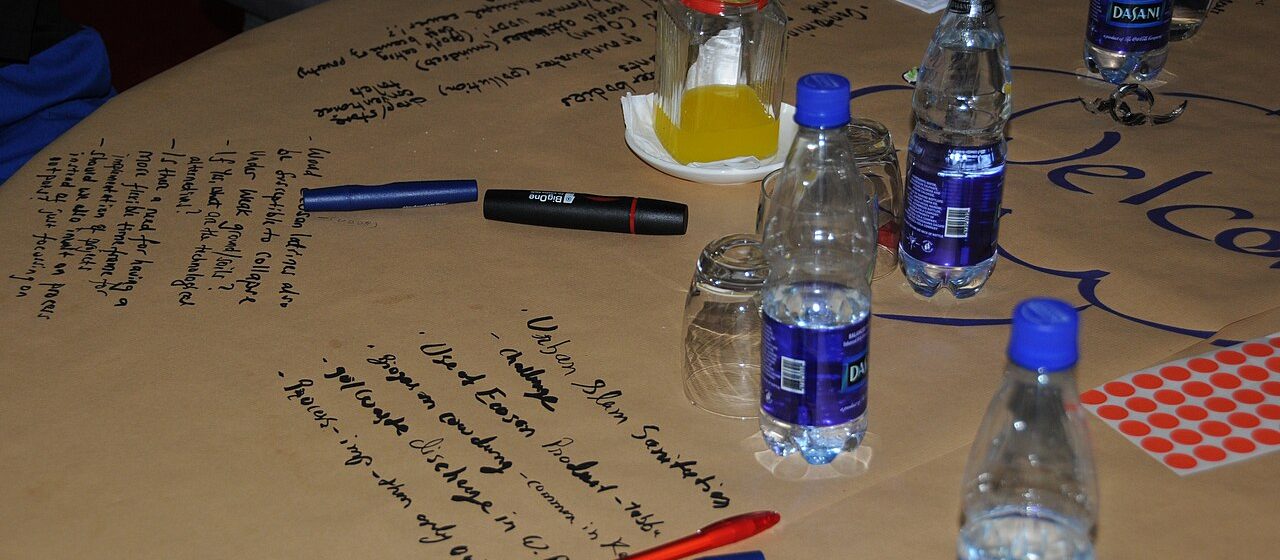
Big community questions, such as how to cut energy use, protect the Fox River or make a neighborhood easier to walk, rarely get solved by a single public hearing or an online comment thread. People need time to learn, share their own experience and hear from neighbors who see things differently. Study circles create that time and space, and they were a core part of the original Sustainable Fox Valley initiative for exactly that reason.
What is a study circle?
Study circles have deep roots in Swedish adult education, and in the United States they are closely associated with Everyday Democracy, a national organization that helps communities move from conversation to action. The approach has a few defining features:
Small and diverse
Usually 8 to 12 participants, deliberately drawn from different ages, backgrounds, neighborhoods and points of view.
Facilitated
A trained, neutral facilitator guides the conversation, keeps it fair and does not push personal opinions or expertise onto the group.
Multiple sessions
The group meets several times over weeks, so trust and understanding can build. One evening is rarely enough.
Dialogue to action
Sessions move from personal experience to examining options to deciding on concrete actions, often shared at a larger action forum.
Why study circles work for sustainability
- They build shared understanding. Using The Natural Step and our three guiding questions, participants agree on what “sustainable” means before arguing about solutions.
- They include people who do not usually speak up. Small groups and good facilitation make room for renters, younger residents, newcomers and others who may skip public meetings.
- They turn talk into projects. Circles end with action ideas that participants commit to, from a rain garden workday to a proposal for a village committee.
- They create relationships. The connections formed in a circle often outlast the circle itself and support future community efforts.
A sample session plan
Here is a typical five-session structure we recommend for a sustainability study circle. Each session runs about 90 minutes to two hours. Groups can compress or extend it to fit their schedule.
| Session | Focus | Key activities |
|---|---|---|
| 1. Getting started | Who we are and why we care | Introductions, ground rules, personal stories about home, work and place in the Fox Valley |
| 2. Understanding the issue | What sustainability means here | The definition and three guiding questions, the four system conditions, local examples from the Fox River and Lake Winnebago |
| 3. Looking at options | Different approaches and trade-offs | Weighing several approaches, discussing who benefits and who bears the costs, listening across differences |
| 4. Choosing actions | What we can do | Brainstorming actions for individuals, the group and local institutions, then prioritizing |
| 5. Moving to action | Commitments and next steps | Action plans with owners and dates, preparing to share ideas at an action forum or with decision-makers |
How to start a study circle
- Find a host and a focus. A neighborhood association, library, school, congregation, workplace or municipal committee can host. Agree on the topic and what you hope will come out of it.
- Recruit for diversity. Aim for 8 to 12 people who do not all know each other or share the same views. Personal invitations work far better than flyers alone.
- Prepare a facilitator. Choose someone who can stay neutral, keep time and draw out quieter voices. Ideally, pair a facilitator with a note-taker or co-facilitator.
- Set the logistics. Pick an accessible location, consistent day and time, and plan for childcare or refreshments if possible. Confirm all session dates up front.
- Run the sessions. Follow a session plan, start with ground rules and keep a record of ideas and agreements.
- Hold an action forum. Bring the group, and other circles if there are several, together to share ideas and commit to next steps. Invite local decision-makers to listen.
- Follow up. Check in a month later. Celebrate what happened and decide whether to continue as an action team or start a new circle.
Tips for facilitators
Stay neutral
Your job is to help the group think, not to tell it what to think. If you have strong opinions on the topic, consider asking someone else to facilitate.
Use ground rules
Simple agreements, such as speaking for yourself, listening without interrupting and respecting confidentiality, set the tone. Let the group write them in the first session.
Balance participation
Go-arounds, pairs and small breakout conversations help quieter participants speak and keep any one voice from dominating.
Keep it local and concrete
Ask for examples from participants’ own homes, workplaces and neighborhoods. Concrete stories make abstract principles real.
Where study circles fit in our programs
Study circles connect every part of Sustainable Fox Valley. Neighbors can use them to launch projects on our households and neighborhoods page. Organizations can use them to engage staff before a Natural Step workshop. Municipalities can use them to gather public input for plans, as described on our municipalities page.
For stories, research and more detail on running circles, read How Study Circles Build Stronger, Greener Neighborhoods. If you would like to host a circle with support from us, see Community Partners.