Key takeaways
- The Fox Cities have a growing, connected trail network: Loop the Little Lake and the Fox Cities Trestle, Loop the Locks along the Fox River, the Friendship Trail, and regional routes like the Wiouwash and Fox River state trails.
- Every Valley Transit bus carries a front bike rack at no extra charge, which makes bike-and-bus trips practical across Appleton, Neenah, Menasha and Kaukauna.
- Your first bike commute is mostly a planning exercise: pick a low-stress route, do a weekend test ride, and keep a backup plan.
- Winter riding is doable with studded tires, fenders, lights and layers, and it is fine to switch modes on the worst days.
- Going car-light, not car-free, is the realistic goal for most Fox Valley households.
Twenty years ago, the Fox Cities were mostly a place you drove through. Today you can ride a lighted trestle across Little Lake Butte des Morts at sunset, follow the Fox River past historic locks from Kimberly to Kaukauna, and roll on crushed stone from Oshkosh to Hortonville without seeing a car for miles. That network is not only for weekend recreation. With a little planning, it can carry a real share of your everyday trips to work, school, the grocery store and the farmers market.
This guide covers the trails worth knowing, how to plan a bike or bike-and-bus commute, what it takes to ride through a Wisconsin winter, and how a household can drive less without giving up the car entirely.
The Fox Cities trail network at a glance
The trails below are the backbone of active transportation in and around the Fox Cities. Lengths and surfaces come from managing agencies and trail guides; segments are added and improved regularly, so check current maps before you ride.
| Trail | Where | Length and surface | Best for |
|---|---|---|---|
| Loop the Little Lake | Fox Crossing, Menasha and Neenah, around Little Lake Butte des Morts | About 3.5-mile loop; asphalt, boardwalk and concrete | Family rides, walking, lake views, the 1,600-foot Fox Cities Trestle |
| Friendship State Trail (Fox Cities segments) | Fox Crossing, Menasha and Neenah, sharing the Trestle segment | Paved in the Fox Cities; part of a planned longer cross-state route | East-west connections and commuting |
| Loop the Locks | Kimberly, Little Chute, Kaukauna, Combined Locks, with links toward Appleton | Contiguous loop of 10+ miles, about 13 miles with connections; mostly off-road | River views, historic locks, longer loops |
| Wiouwash State Trail (south segment) | Oshkosh to Hortonville via Medina and Larsen | About 22 miles; crushed stone; no state trail pass required | Longer rides, quiet countryside |
| Fox River State Trail | Downtown Green Bay south through De Pere and into Calumet County | About 25 miles; 11 miles asphalt, 14 miles crushed stone | Day trips; state trail pass required for riders 16+ |
| Newberry Trail | Appleton, along the Fox River canal near downtown | Short paved trail | Downtown access, river walks |
| CB Trail | Along County Road CB in the Fox Crossing area | Paved side path | North-south connections on the west side of the Fox Cities |
For more detail, see the Wisconsin DNR pages for the Wiouwash State Trail and the Fox River State Trail.
Loop the Little Lake and the Trestle
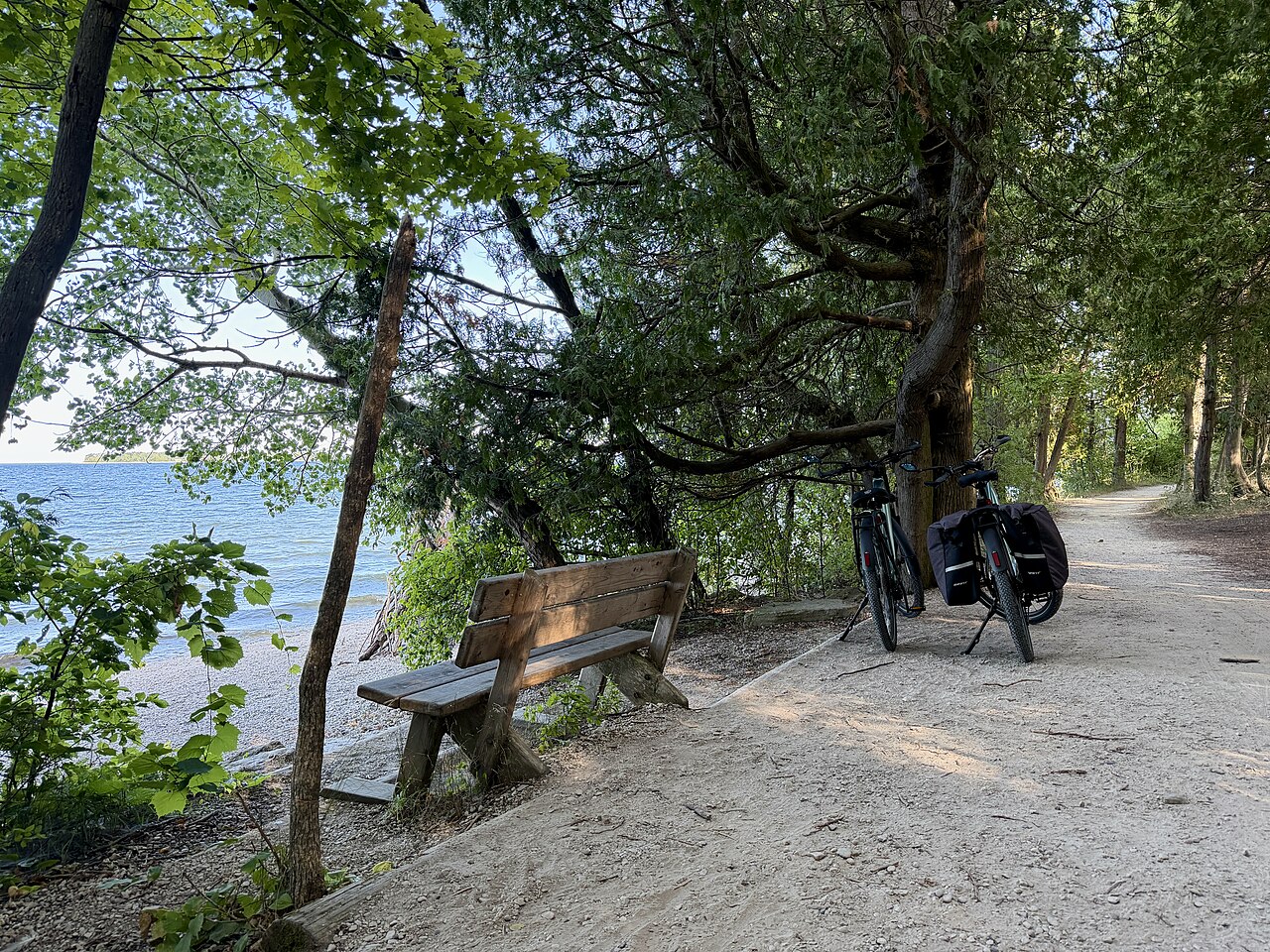
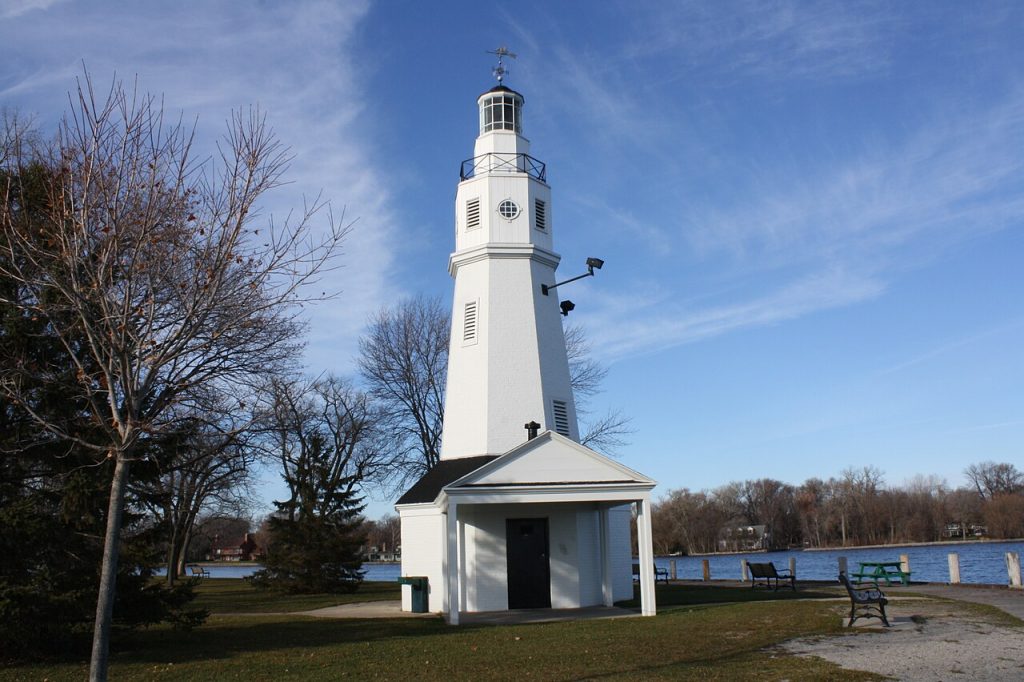
If you only ride one trail in the Fox Cities, make it this one. The loop links Fritse Park in Fox Crossing, Menasha’s waterfront, Doty Island and several Neenah parks using four trestle bridges, including the lighted Fox Cities Trestle across the lake. Parks along the way have parking, restrooms in season and bike repair stations. It is flat, family friendly and especially good at sunrise and sunset.
Loop the Locks
East of Appleton, Loop the Locks follows the Fox River through the Heart of the Valley communities, with views of the historic navigation locks, riverside parks and small downtowns. Communities along the route, including Kimberly, have added segments in recent years, and the network continues to fill gaps. It is a great half-day ride with a coffee stop in Little Chute or Kaukauna.
Commuting by bike and bus
The Fox Cities are compact. Many trips, such as downtown Appleton to Lawrence University, Neenah to Menasha, or Kimberly to Little Chute, are under five miles, which is a 20- to 30-minute ride at a relaxed pace. The challenge is less distance than finding comfortable routes across busy arterials and the river.
Plan for low stress, not shortest distance
The fastest route by car is rarely the best by bike. Look for trails, quieter parallel streets and signalized crossings of major roads. Adding a few minutes to avoid a high-speed arterial makes the ride far more pleasant and makes you more likely to keep doing it.
Combine bike and bus
Every Valley Transit bus has a bike rack on the front, available year round on all routes at no extra charge and with no permit, according to Valley Transit’s riding guide. That opens up useful combinations: ride to a bus stop, take the bus across the river or up a long hill, and ride the last stretch. It is also a built-in backup if the weather turns or you get a flat.
Consider an e-bike
E-bikes flatten hills, extend range and let you arrive at work without a shower. Wisconsin recognizes three classes: Class 1 (pedal assist to 20 mph), Class 2 (throttle to 20 mph) and Class 3 (pedal assist to 28 mph, riders 16 and older). On roads they are generally treated like bicycles, but trail rules vary by managing agency, so check posted signs and local ordinances. The Wisconsin Bike Fed’s e-bike resources are a good starting point.
Your first bike commute, step by step
- Check your bike. Inflate tires to the pressure printed on the sidewall, test both brakes, and make sure the chain is clean and lubricated. A local bike shop tune-up is worth it if the bike has been sitting.
- Map a low-stress route. Use a cycling map app set to prefer trails and quiet streets, then compare it with a regional trail map. Note where you cross major roads and the river.
- Do a weekend test ride. Ride the route on a Saturday when traffic is light and you are not on the clock. Time it and note any spots that feel uncomfortable.
- Solve the arrival problem. Find out where you can lock your bike and whether there is anywhere to change. A U-lock through the frame and a locking skewer or cable for the front wheel is a solid setup.
- Pack light. Use a rear rack with a pannier instead of a backpack, especially in summer. Leave a change of clothes or shoes at work if you can.
- Start with one day a week. Pick a day with good weather and a light schedule. Add days as it becomes routine.
- Have a backup plan. Know the bus route that runs near your path, and keep a phone charged in case you need a ride.
Walking: the most underrated way to get around
Walking needs no gear and works for the short trips that make up a big share of household driving: the corner store, school drop-off, the library, a neighbor’s house. A few habits help:
- Walk the short trips first. Anything under a mile is often faster on foot than driving, parking and walking from the lot.
- Organize a walking school bus. Parents take turns walking a group of kids to school along a set route. It reduces drop-off congestion and gets kids moving.
- Explore downtown on foot. Appleton’s Fox Trot Trail, a roughly two-mile walking route marked with fox pawprints, links downtown points of interest and is a fun way to rediscover your city.
- Clear your sidewalk promptly in winter. Fox Cities municipalities set deadlines for clearing snow after a storm. A shoveled walk makes walking possible for neighbors who use wheelchairs, walkers or strollers.
Riding through a Wisconsin winter
Winter is the real test of active transportation in northeast Wisconsin. Plenty of Fox Valley riders keep going from November to March. The key is equipment and flexibility, not toughness.
Winter gear checklist
- Studded tires for ice, or wider tires at lower pressure for packed snow
- Full fenders to keep slush and road salt off you and the drivetrain
- A bright white front light and a red rear light, used even in daylight on gray days
- Wind-blocking outer layer, with layers you can unzip as you warm up
- Lobster-style mittens or insulated gloves, and a thin balaclava or neck gaiter
- Clear or yellow glasses or ski goggles for snow and wind
- Waterproof boots or shoe covers
Know when to switch modes
Fresh heavy snow, freezing rain and deep cold are good days for the bus, a carpool or working from home. Riding in winter does not mean riding every day; it means riding on the many winter days when conditions are fine.
Safety and the rules of the road
Wisconsin law treats bicycles as vehicles. Cyclists ride with traffic, obey signals and signs, and must use a white front light and a red rear reflector when riding in darkness (a red rear light is strongly recommended). Drivers must leave at least three feet when passing a bicyclist.
- Be predictable. Ride in a straight line, signal turns, and avoid weaving between parked cars.
- Watch intersections and driveways. Most crashes happen where paths cross. Make eye contact with drivers before you go.
- Share trails courteously. Announce yourself when passing (“on your left”), slow down around children and dogs, and yield to walkers.
- Wear a helmet. Wisconsin has no statewide adult helmet law, but a well-fitting helmet is cheap insurance.
Going car-light as a household
Car-free living is hard in much of northeast Wisconsin, and that is fine. The realistic goal for most households is to be car-light: reduce the number of vehicles or the miles you drive, and use walking, biking and transit for the trips they handle well.
- Track one month of trips. Write down each car trip and its distance. Many households find a large share of trips are under three miles.
- Replace the easy trips first. Errands near home, school drop-off and visits in your neighborhood are the best candidates.
- Consider dropping a second car. If one vehicle sits most of the week, the savings on insurance, registration, maintenance and depreciation can pay for a good e-bike, a cargo bike and bus fares, with money left over.
- Choose location carefully when you move. Living near a trail, bus route or downtown makes every other step easier.
Next steps
Every trip you walk or bike cuts fuel use, reduces runoff-carrying pollutants from traffic, and makes streets friendlier for everyone.
- Learn how transportation fits into the bigger picture in What Is Sustainability? and estimate your impact with our footprint calculator.
- Want better bike routes on your street? Our study circles and municipalities page show how neighbors can work with local government.
- Check our events page for group rides, walks and community clean-ups.
Frequently asked questions
Do I need a state trail pass to ride Fox Cities trails?
Most local trails, including Loop the Little Lake and city trails, do not require one. The Wiouwash State Trail does not require a state trail pass. The Fox River State Trail does require a state trail pass for bicycling by riders 16 and older. Check the Wisconsin DNR trail page before you go, since rules can change.
Can I bring my bike on a Valley Transit bus?
Yes. Valley Transit buses have a bike rack on the front, available year round on all routes, with no extra charge and no permit required. Valley Transit has offered rack demonstrations at the Appleton Transit Center so you can practice loading before your first trip.
Are e-bikes allowed on Fox Cities trails?
Wisconsin recognizes three classes of e-bikes, and they are generally treated like bicycles on roads. Trail rules are set by the managing agency and vary: many DNR trails allow pedal-assist Class 1 and Class 3 bikes with a speed limit, while local and county trails may restrict some classes. Check posted signs and local ordinances.
Is it realistic to bike commute through a Wisconsin winter?
For many people, yes, with the right setup: studded tires for ice, fenders, bright lights, layered clothing, and a route that favors plowed trails and quieter streets. Plenty of riders keep cycling on mild winter days and switch to the bus or a ride share during storms and deep cold.
How much space must drivers give cyclists in Wisconsin?
Wisconsin law requires drivers to leave at least three feet when passing a bicyclist. Cyclists must ride with traffic and, after dark, use a white front light and a red rear reflector; a red rear light is strongly recommended.