Key takeaways
- In northeast Wisconsin, heating dominates home energy use, so the best upgrades stop heat from leaking out: air sealing first, then insulation.
- Several of the most effective steps cost little or nothing and pay back within one heating season.
- Big-ticket items such as new windows and heating systems make most sense when the old equipment is failing anyway.
- Federal home efficiency tax credits ended for work after 2025. Check Focus on Energy and your utility for current rebates before you buy.
Every Fox Valley homeowner knows the feeling: the first truly cold week of November, the furnace running nonstop, a draft you can feel near the floor, and a gas bill that makes you wince. The good news is that most homes here, especially those built before the 1990s, have plenty of room for improvement, and many of the fixes are inexpensive.
This guide ranks 20 common upgrades roughly by how quickly they pay for themselves through lower energy bills in a typical northeast Wisconsin home. It also explains the order in which to tackle them, the safety checks that matter, and how to find current incentives. If you are new to the bigger picture, start with What Is Sustainability? and come back here when you are ready to roll up your sleeves.
Why winter changes the math in the Fox Valley
The Fox Cities sit in what building codes call climate zone 6, which means long, cold heating seasons and modest cooling needs. In this climate, space heating is usually the single largest energy use in a home, and most households heat with natural gas. That has three practical consequences:
- The building envelope matters most. Walls, attic, basement, windows and doors decide how much heat escapes. Fixing the envelope makes every heating system work less.
- Air leaks are often bigger than insulation gaps. Warm air rising through hidden holes into the attic can waste more energy than thin insulation, and it is what causes many ice dams along our eaves.
- Sequence saves money. Sizing a new furnace or heat pump after sealing and insulating often means a smaller, cheaper system.
How we ranked these upgrades
Simple payback is the cost of an upgrade divided by the yearly energy savings. A $200 project that saves $100 a year has a two-year payback. We grouped upgrades into bands based on typical costs and savings for an older single-family home in northeast Wisconsin. These are planning estimates, not guarantees. Your payback depends on your home’s current condition, your fuel prices, how you use your home, and available rebates. A leaky 1920s house will see faster paybacks from air sealing than a tight 2010 build.
Payback is also not the only reason to do a project. Comfort, health, durability and lower emissions all count. But ranking by payback helps you spend your first dollars where they go furthest.
The ranking: 20 upgrades from fastest to slowest payback
| # | Upgrade | Typical cost | Rough simple payback | Notes for Wisconsin homes |
|---|---|---|---|---|
| 1 | Thermostat setback schedule | Free | Immediate | Lower the setting at night and while away |
| 2 | Water heater set to 120°F | Free | Immediate | Also reduces scald risk |
| 3 | Change furnace filter on schedule | Low | Under 1 year | Check monthly in peak heating season |
| 4 | LED bulbs in most-used fixtures | Low | Under 1 year | Start with lights on several hours a day |
| 5 | Efficient showerheads and faucet aerators | Low | Under 1 year | Cuts water heating energy |
| 6 | Advanced power strips, unplug idle electronics | Low | About 1 year | Targets entertainment and office “phantom” loads |
| 7 | Weatherstripping and door sweeps | Low | 1 to 2 years | Focus on exterior and attached-garage doors |
| 8 | Foam gaskets behind exterior-wall outlets and switches | Low | 1 to 2 years | Quick, easy DIY |
| 9 | Insulate exposed hot water pipes | Low | 1 to 2 years | Start with the first few feet from the heater |
| 10 | Window film kits or cellular shades | Low to moderate | 1 to 3 years | Good stopgap for drafty older windows |
| 11 | Smart or programmable thermostat | Moderate | 1 to 3 years | Fastest payback if you were not using setbacks; rebates often available |
| 12 | Attic air sealing | Moderate | 2 to 5 years | Seal bypasses around chimneys, stacks, lights and hatches |
| 13 | Basement rim joist sealing and insulation | Moderate | 2 to 5 years | A classic cold, leaky spot in Wisconsin basements |
| 14 | Attic insulation to R49 to R60 | Moderate | 3 to 7 years | Do after air sealing; rebates often available |
| 15 | Seal ducts in unconditioned spaces | Moderate | 3 to 7 years | Matters most for ducts in attics, crawlspaces or garages |
| 16 | Heat pump water heater at replacement time | Moderate to high | 3 to 8 years versus electric resistance | Weaker payback when replacing gas; best in a large basement |
| 17 | Dense-pack wall insulation in empty walls | High | 5 to 12 years | Big comfort gain in uninsulated older homes |
| 18 | Storm windows (interior or exterior) | Moderate to high | 5 to 15 years | Often far cheaper than replacement windows |
| 19 | High-efficiency furnace or cold-climate heat pump at replacement | High | Varies widely | Compare the extra cost over a standard unit, not the full price |
| 20 | Full window replacement | Very high | Often 20+ years on energy alone | Replace when windows are failing, not for savings alone |
Tier 1: Free and low-cost steps you can do this weekend
Set your thermostat to work for you
According to the U.S. Department of Energy, you can save as much as 10 percent a year on heating and cooling by turning your thermostat back 7 to 10 degrees for eight hours a day from its normal setting. See the DOE’s guidance on programmable thermostats. In a Wisconsin winter, that typically means a lower setting overnight and during the workday. A smart thermostat simply automates the habit.
Turn down the water heater
Many water heaters ship set hotter than needed. Setting yours to about 120°F reduces standby losses and scald risk. If you have a dishwasher without a booster heater, check its manual first.
Stop the obvious drafts
On a cold, windy day, hold the back of your hand near exterior doors, outlets on outside walls, the attic hatch and window frames. Replace worn weatherstripping and door sweeps, install foam gaskets behind outlet covers, and caulk gaps around trim. An attached garage door into the house deserves special attention because it should also be tight to keep exhaust fumes out.
Tier 2: Air sealing and insulation, the core of a winter-ready home
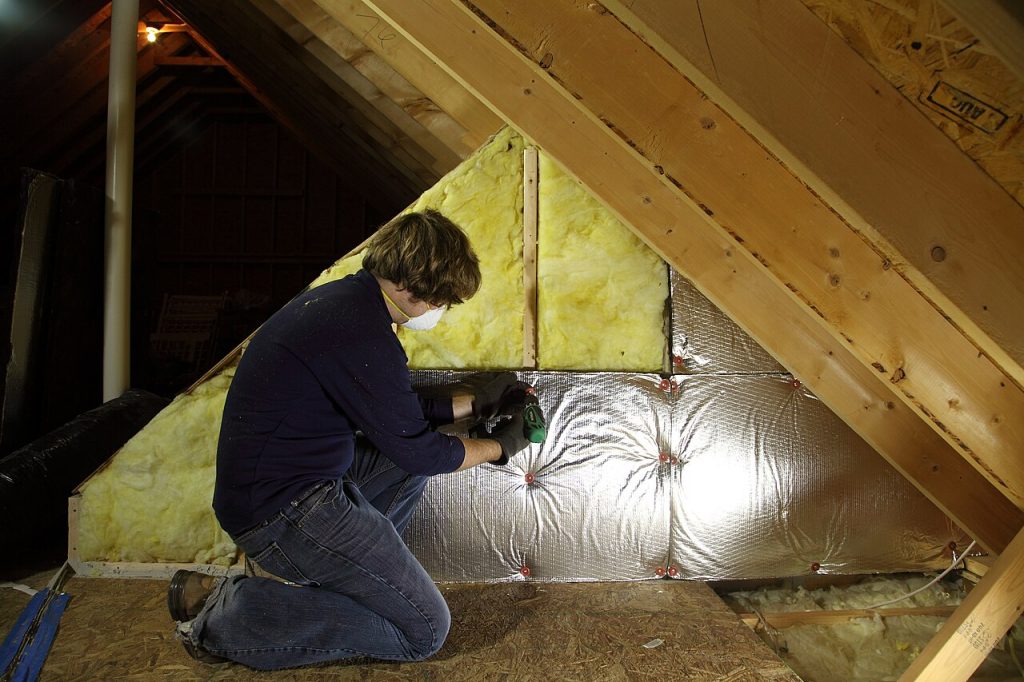
Air seal before you insulate
Insulation slows heat moving through materials, but it does little to stop air moving through holes. In most older homes, warm air escapes into the attic through gaps around chimneys, plumbing vent stacks, recessed lights, wiring holes, dropped soffits and the attic hatch. Seal these first with foam, caulk or rigid material as appropriate. Then add insulation on top.
Insulate to the right level
For our climate zone, ENERGY STAR recommends bringing an uninsulated attic to about R60, or adding about R49 if you already have three to four inches. Blown-in cellulose or fiberglass is the usual choice for open attic floors. ENERGY STAR also suggests about R15 continuous sheathing or R19 batts for basement walls and R30 for floors over unheated spaces.
Do not forget the basement
The rim joist, where the house framing sits on the foundation, is one of the leakiest spots in most Wisconsin basements. Cutting rigid foam to fit each bay and sealing the edges, or having a contractor apply spray foam, often improves comfort on the first floor noticeably.
Ice dams are an energy problem
Those heavy icicles along Fox Valley rooflines are usually a symptom of heat leaking into the attic, melting snow that refreezes at the cold eaves. Air sealing and insulation, along with proper attic ventilation, are the long-term fix. Roof heat cables only treat the symptom.
Tier 3: Bigger-ticket upgrades and when they make sense
Heat pump water heaters
A heat pump water heater pulls heat from surrounding air to heat water, using much less electricity than a standard electric tank. They work well in roomy Wisconsin basements, where they also dehumidify in summer. The financial case is strongest when replacing an electric resistance unit; replacing a gas tank depends on local gas and electric prices. Focus on Energy has offered instant discounts through participating contractors.
Furnaces and cold-climate heat pumps
If your furnace is near the end of its life, plan the replacement before it fails in January. Modern cold-climate heat pumps can heat homes in our climate, often paired with an existing or new gas furnace as backup in the coldest weather. Whatever you choose, ask for a room-by-room load calculation (often called a Manual J), especially if you have already sealed and insulated, so the new system is not oversized.
Windows
Replacement windows feel like the obvious upgrade, but on energy savings alone they rank last. Unless windows are rotting or failing, weatherstripping, interior storm panels or quality exterior storm windows deliver much of the comfort benefit at a fraction of the cost.
The right order of operations
Doing the right things in the wrong order wastes money. Here is the sequence we recommend for most Fox Valley homes:
- Get an assessment. Start with a home energy assessment, ideally with a blower door test that measures air leakage and finds hidden leaks. Focus on Energy lists free and rebated assessment options.
- Do the free and low-cost steps now. Thermostat schedule, water heater setting, filters, LEDs and weatherstripping can happen this week.
- Fix safety issues. Address wiring, combustion venting, moisture problems and carbon monoxide alarms before tightening the house.
- Air seal, then insulate. Attic first, then the basement rim joist, then walls if they are empty.
- Seal ducts and balance the system. Especially any ductwork running through unheated spaces.
- Right-size new equipment. When the furnace, air conditioner or water heater needs replacing, size it to your newly efficient home.
- Consider renewables last. Once your home uses less energy, a smaller solar array can cover a larger share of it. See our guide to rooftop solar in northeast Wisconsin.
Paying for upgrades in 2026
Focus on Energy
Focus on Energy is Wisconsin’s statewide energy efficiency program, funded by participating utilities. In 2026 it has offered rebates for insulation and air sealing done by participating Trade Ally contractors, with larger amounts for income-qualified households. For example, attic insulation rebates ranged from about $650 to $850 and ENERGY STAR qualified air sealing from about $850 to $1,475, depending on household income. A smaller rebate has been available for DIY attic insulation and air sealing, along with rebates for smart thermostats, heat pumps and heat pump water heaters. Wisconsin’s IRA Home Energy Rebates (HOMES and HEAR), also administered through Focus on Energy, remained active in fall 2026 with income-based eligibility rules.
Program details change often, and Focus on Energy’s next four-year program cycle begins in January 2027. Always confirm current amounts, deadlines and contractor requirements before you sign a contract.
Income-qualified help
The Wisconsin Home Energy Assistance Program helps eligible households with heating costs, and eligible homeowners may also be offered weatherization services and emergency furnace repair. Apply at energybenefit.wi.gov or call 1-866-HEATWIS (432-8947).
Federal tax credits
The federal energy-efficient home improvement credit (25C) does not apply to property placed in service after December 31, 2025, and the residential clean energy credit (25D) does not apply to expenditures after that date. Be cautious of any sales pitch in 2026 that promises these credits for new work.
Next steps
- Not sure where to start? Our virtual Home Energy & Waste Assessment reviews your bills and home with you and produces a prioritized plan.
- Make it social: join or start a block team for the Fox Cities Unplugged Energy Challenge.
- Find more household ideas on our Households and Neighborhoods page.
Book an assessment Join the energy challenge
Frequently asked questions
What is the best first energy upgrade for an older Fox Valley home?
For most older homes, it is attic air sealing followed by attic insulation. Heat rises, so gaps around light fixtures, chimneys, plumbing stacks and attic hatches leak warm air all winter. Sealing those gaps and then bringing insulation up to the R49 to R60 range ENERGY STAR recommends for our climate usually gives the largest comfort and savings gain.
Can I still get a federal tax credit for insulation or a heat pump?
Not for new work. The federal energy-efficient home improvement credit (25C) does not apply to property placed in service after December 31, 2025, and the residential clean energy credit (25D) ended for expenditures after that date. Check Focus on Energy, your utility and Wisconsin’s IRA Home Energy Rebates for current incentives instead.
Are new windows worth it for energy savings?
Usually not on energy savings alone. Full window replacement is one of the most expensive upgrades per unit of energy saved. Replace windows when they are failing or for comfort and appearance, and in the meantime use weatherstripping, interior film kits, cellular shades or storm windows.
Will air sealing make my house too tight or unhealthy?
Most older Wisconsin homes are far from too tight. Still, any serious air sealing project should include a combustion safety test of gas appliances, working carbon monoxide alarms and properly vented bathroom and kitchen fans. Contractors who follow Focus on Energy program standards include these checks.
How do I know if I qualify for free weatherization help?
Wisconsin’s Home Energy Assistance Program uses household income, household size and energy costs to determine eligibility, with a gross income limit of 60 percent of state median income. Apply at energybenefit.wi.gov or call 1-866-HEATWIS (432-8947). Eligible homeowners may also be offered weatherization services.