Key takeaways
- A neighborhood energy challenge is a friendly, time-limited effort where households or teams try to cut their energy use and share what works.
- Score each household against its own past use, adjusted for weather, so a cold January in the Fox Valley does not wreck the results.
- Twelve weeks is a good length: long enough to build habits, short enough to keep momentum.
- Pair quick behavior changes with an upgrade drive, using Focus on Energy and utility programs, since federal 25C and 25D credits ended after 2025.
- Design for fairness from the start: renters, older homes and lower-income households must be able to win too.
When the original Sustainable Fox Valley website went up, its events page carried a short, hopeful line: the Fox Cities Unplugged Energy Challenge, “to be announced soon.” The idea was simple and powerful. Neighbors across Appleton, Neenah, Menasha, Kaukauna and the surrounding villages would compete, cooperate and learn together to use less energy at home.
That idea is still sound, and the tools for doing it well are better than ever: utilities offer online usage data, smart thermostats and LED lighting are cheap, and statewide programs fund deeper upgrades. This guide is a practical playbook for anyone who wants to run an energy challenge on their block, in their apartment building, congregation, school or workplace. It is also the set of lessons we are carrying into Fox Cities Unplugged.
What a neighborhood energy challenge looks like
An energy challenge is a structured, time-limited effort in which participants track their energy use, try a set of actions, and compare progress. The competition is mostly an excuse to start conversations, share tips and make saving energy feel normal. Research on home energy reports that compare households with their neighbors has found real but modest savings, typically a few percent, that can persist over time. A well-run challenge aims for more by adding hands-on help and upgrades.
There are several common formats, and you can mix them:
Household savings challenge
Each household tries to beat its own baseline. Simple, private and fair to homes of every size.
Team challenge
Streets, buildings, congregations or classrooms compete on average percentage savings. Builds camaraderie and peer support.
Action challenge
Participants earn points for completed actions such as installing LEDs, sealing an attic hatch or scheduling an assessment. Great when meter data is hard to collect.
Upgrade drive
The neighborhood negotiates group scheduling with contractors for assessments, insulation or heat pumps. Fewer participants, bigger savings.
Key design decisions
Most challenge problems come from decisions made casually at the start. Settle these before you recruit anyone.
| Decision | Options | Our recommendation |
|---|---|---|
| Length | One month, one season, a full year | About 12 weeks, ideally starting in late October or January when heating dominates bills |
| What to measure | Electricity only, natural gas only, both, or completed actions | Both electricity (kWh) and natural gas (therms), plus an action checklist for those without data |
| Baseline | Same months last year, the prior month, or a multi-year average | Same billing months from the previous year, weather-adjusted for heating |
| Scoring | Total savings, percentage savings, per-person savings | Percentage savings against each household’s own baseline, so small homes and large homes compete fairly |
| Team size | Individuals, small teams, large districts | Teams of 8 to 20 households who know or can meet each other |
| Data privacy | Public names, team totals only, self-reported percentages | Team totals only, with written consent and a promise to delete data afterward |
| Prizes | Cash, gift cards, events, recognition | Shared, local and modest: a block party, local gift cards, public recognition |
Measuring fairly through a Wisconsin winter
In northeast Wisconsin, heating drives home energy use, and the weather varies a lot from year to year. If last January was mild and this January is bitterly cold, a household could work hard and still use more natural gas. Without weather adjustment, your challenge will reward luck instead of effort.
Use heating degree days
A heating degree day (HDD) measures how cold a day was relative to a base temperature, usually 65°F. A day averaging 25°F adds 40 HDD. Add up the HDD for each billing period, and you have a simple measure of how much heating the weather demanded. Many utility portals and free weather data sites report HDD for nearby stations such as Appleton or Oshkosh.
To compare fairly, divide each household’s natural gas use by the HDD in the same billing period. Here is a hypothetical example to illustrate the math:
- Baseline January: 150 therms used, 1,300 HDD, or about 0.115 therms per HDD.
- Challenge January: 160 therms used, 1,500 HDD, or about 0.107 therms per HDD.
- Result: the household used more gas in total, but about 7 percent less per degree day. That is real savings.
Electricity is less weather-sensitive in winter for most gas-heated homes, so a straightforward comparison to the same months last year usually works. For homes with electric heat or heat pumps, apply the same degree-day approach to electricity.
A 12-week plan, step by step
- Form an organizing team (weeks minus 6 to minus 4). Three to five people is enough: a coordinator, a data volunteer comfortable with spreadsheets, someone to handle communications, and a couple of block connectors who know everyone.
- Set the rules and prizes (week minus 4). Decide length, metrics, scoring, teams and privacy using the table above. Write them on one page.
- Recruit door to door (weeks minus 3 to minus 1). Flyers and social media help, but personal invitations from neighbors work best. Aim for at least a third of households on a block.
- Hold a kickoff night (week 1). Meet at a library, school or someone’s garage. Explain the rules, collect consent forms, help people find their usage data, and hand out a quick-win checklist.
- Do the quick wins together (weeks 1 to 3). Schedule a “LED swap and weatherstrip” Saturday where volunteers help neighbors with simple tasks, especially older residents.
- Share weekly updates (weeks 2 to 12). A short email or group text with team standings, one tip, and one neighbor’s story keeps energy up. Celebrate participation as much as savings.
- Run an upgrade drive (weeks 4 to 10). Help households schedule professional assessments and connect them with Focus on Energy and utility rebates for insulation, air sealing and efficient equipment.
- Hold a midpoint check-in (week 6). Compare progress, troubleshoot data problems, and swap ideas. This is when enthusiasm dips, so make it social.
- Calculate results (week 13). Collect final readings, apply weather adjustment, and compute team percentages. Have a second volunteer double-check the math.
- Celebrate and plan what is next (week 14). Throw the party, give out recognition, and ask everyone what they will keep doing. Delete individual data as promised.
What actually saves energy in a Fox Valley home
Give participants a clear, prioritized list. Quick wins build confidence; upgrades deliver the big, lasting savings.
Quick-win checklist
- Set back the thermostat at night and when away. The U.S. Department of Energy’s Energy Saver guidance notes that setting back 7 to 10 degrees for eight hours a day can save up to about 10 percent a year on heating and cooling.
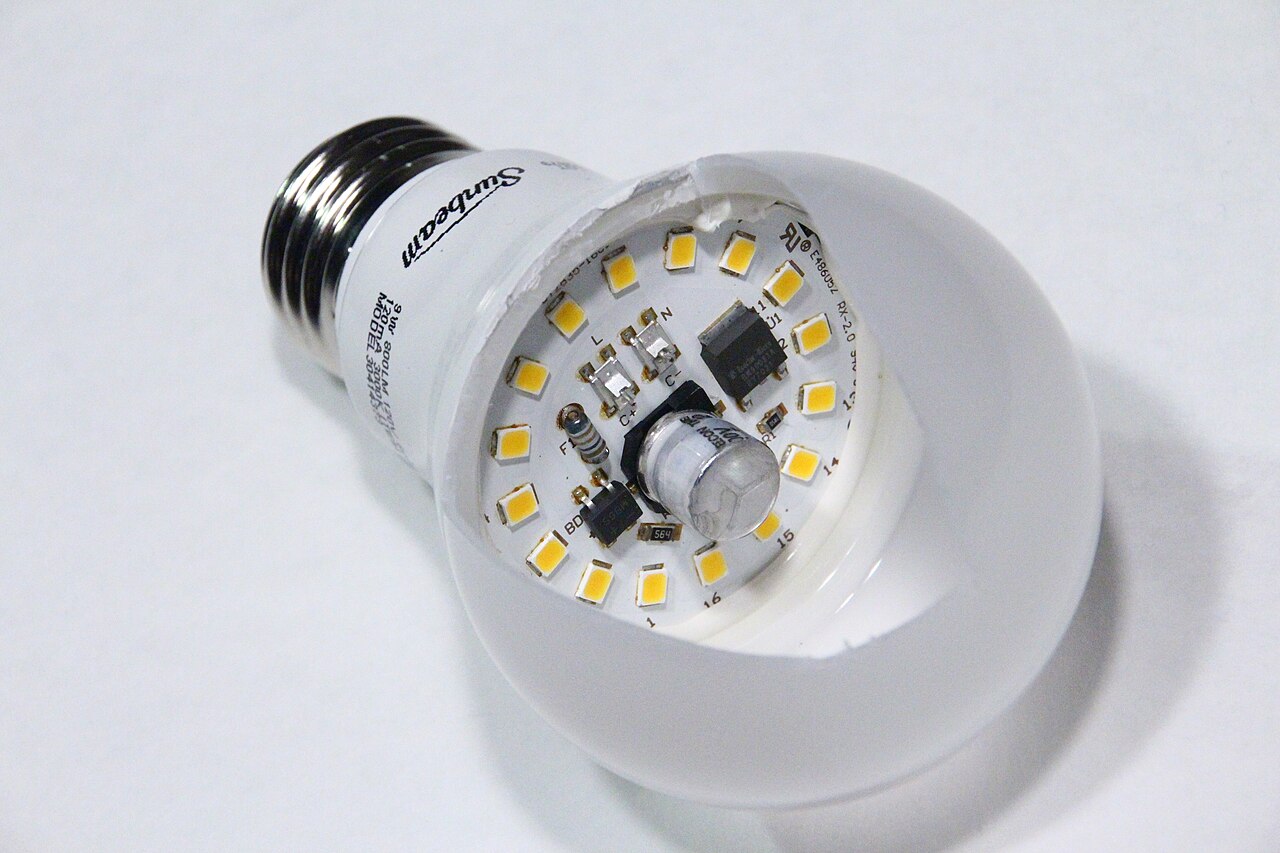
- Replace remaining incandescent and halogen bulbs with LEDs.
- Lower the water heater to about 120°F.
- Change or clean the furnace filter.
- Weatherstrip doors and attic hatches, and caulk gaps around windows and trim.
- Put TVs, game consoles and chargers on switchable power strips.
- Wash clothes in cold water and air-dry when possible.
- Unplug or retire an old second refrigerator or chest freezer in the garage.
Upgrades worth organizing around
The biggest savings in older Fox Cities homes usually come from air sealing and insulating attics and rim joists, followed by efficient heating equipment and water heaters. A professional assessment shows where to start. Federal tax credits for these upgrades are no longer available to most homeowners: the energy efficient home improvement credit (25C) ended for property placed in service after December 31, 2025, and the residential clean energy credit (25D) ended for expenditures after that date. Wisconsin’s Home Energy Rebates programs through Focus on Energy and utility programs may still help. Incentives change, so check current offerings before promising participants anything.
Keeping it fair and inclusive
An energy challenge that only works for homeowners with spare cash will reinforce the gaps it should help close. Build fairness in from the beginning.
- Score percentages, not totals. A family in a small apartment should be able to beat a family in a large house.
- Include renters. Offer an action-based track for renters who pay only electricity or who cannot change the building. Many quick wins work in apartments, and organizers can help renters ask landlords about weatherstripping and programs.
- Connect households with help. Wisconsin’s Home Energy Plus program, administered through the state’s Division of Energy, Housing and Community Resources, offers energy bill assistance and weatherization for eligible households. Income-qualified households may also qualify for enhanced Home Energy Rebates.
- Remove language and access barriers. Translate materials where needed, hold events at accessible locations, and offer childcare or a meal at kickoff.
- Never shame high users. High use often reflects a drafty older house, a medical device, or a home business, not carelessness.
Lessons and pitfalls
- Momentum fades around week six. Plan a social event or a mini-challenge (for example, “phantom load week”) to re-energize.
- The best messengers are neighbors. A story from the family down the street who sealed their attic beats any statistic.
- Savings need to stick. Behavior changes fade unless they become habits or are locked in by equipment like programmable thermostats and insulation. Emphasize the changes that persist.
- Partner carefully. Libraries, schools, congregations and neighborhood associations make great hosts. Be cautious about contractors who want to sponsor in exchange for leads; keep recommendations neutral.
- Document everything. Keep notes on what worked so the next challenge, or the next neighborhood, starts ahead.
Beyond kilowatt-hours
The most lasting outcome of a challenge is often not the energy saved but the relationships built. The tornado that struck Menasha in July 2026 was a reminder that in an emergency, neighbors who already know each other are the first to check on older residents, share tools and help clean up. A challenge that gets people onto each other’s porches builds that kind of resilience, and it creates a ready network for the next community project, from tree planting to a study circle.
Next steps
Ready to organize a challenge on your block or help shape Fox Cities Unplugged?
- Learn about the regional effort and how to get involved on the Fox Cities Unplugged Energy Challenge page, or volunteer as a block connector.
- Give participants a prioritized upgrade list from our guide to home energy efficiency for Wisconsin winters.
- Offer households a starting point with our virtual Home Energy & Waste Assessment, or build your organizing team through a study circle.
Tell us about your neighborhood
Frequently asked questions
How many households do we need to run an energy challenge?
You can run a meaningful challenge with as few as 10 to 20 households on a single block or in one apartment building. Larger challenges work best when split into teams of similar size, such as streets, buildings, congregations or school classrooms, so that participants still know each other.
How do we compare energy use fairly when the weather changes?
Compare each household against its own past use, not against neighbors, and adjust heating energy for weather using heating degree days. Dividing natural gas use by the heating degree days in each billing period gives a simple usage-per-degree-day figure that can be compared across mild and cold months.
Do participants have to share their utility bills?
Not necessarily. Many challenges let households report only their percentage change, or have a trusted volunteer collect readings and publish team totals without individual names. Always ask for consent, explain how data will be used, and delete it when the challenge ends.
Are there federal tax credits for the upgrades people make during a challenge?
Not for most homeowners anymore. The federal energy efficient home improvement credit (25C) ended for property placed in service after December 31, 2025, and the residential clean energy credit (25D) ended for expenditures made after that date. Check Focus on Energy and your utility for current Wisconsin rebates, including the state’s Home Energy Rebates programs.
What prizes work best?
Modest, local and shared prizes usually work better than big individual ones. Think a block party for the winning team, gift cards to a neighborhood business, a donated home energy assessment, or recognition at a city council meeting. Recognizing effort and participation, not just the top saver, keeps everyone engaged.